 English
-
In dredging projects, it’s tempting to choose the lowest-priced hose—especially when large quantities are involved. On paper, saving 10–20% per meter looks like a smart decision.
In reality, many low-cost dredging hoses fail early in operation, leading to downtime, emergency replacement, and higher overall costs.
This article explains why cheap dredging hoses fail in real projects—and how to avoid costly mistakes.
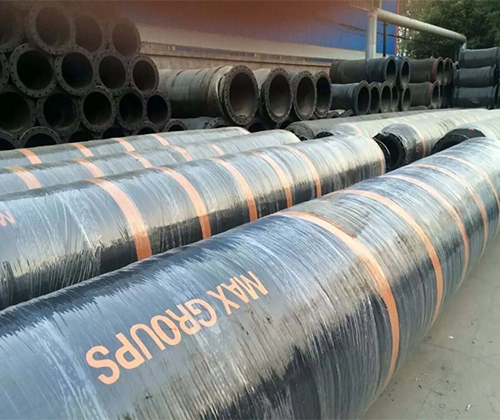
1. Inferior Inner Lining: The First Point of Failure
The inner rubber lining is the most critical layer in a dredging hose. It directly contacts abrasive slurry containing sand, gravel, and sediment.
Low-cost hoses often use:
· Thinner lining thickness
· Lower-grade rubber compounds
· Inconsistent material distribution
What happens in real projects:
· Rapid wear within weeks
· Uneven thinning → weak points
· Sudden rupture under pressure
In high-sand environments, a poor lining can reduce hose life by more than 50%.
2. Weak Bonding Between Layers (Delamination)
A dredging hose is a multi-layer structure. If the bonding between layers is weak, failure is inevitable.
Cheap hoses often suffer from:
· Poor vulcanization control
· Low bonding strength
· Uneven reinforcement embedding
Real-world consequence:
· Internal separation (delamination)
· Blistering or swelling
· Sudden burst during operation
This type of failure is difficult to detect early and often occurs without warning.
3. Low-Quality Reinforcement Structure
Reinforcement layers determine the hose’s ability to handle pressure and maintain shape.
Cost-cutting measures may include:
· Fewer reinforcement layers
· Lower-strength fabric or wire
· Poor alignment during manufacturing
Result in operation:
· Hose deformation under pressure
· Reduced pressure capacity
· Increased risk of collapse or failure
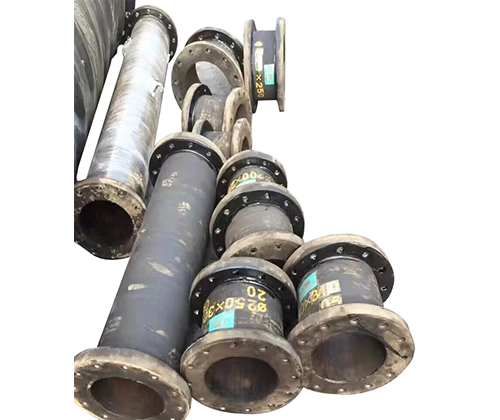
4. Poor Flange Quality and Misalignment
Flanges are critical connection points in dredging systems.
In low-cost products:
· Steel quality may be lower
· Drilling accuracy may be inconsistent
· Welding may be uneven
Consequences:
· Leakage at joints
· Bolt stress concentration
· Connection failure under load
A flange issue can shut down the entire pipeline system.
5. Lack of UV and Environmental Resistance
Dredging hoses operate under constant exposure to:
· Sunlight (UV)
· Saltwater
· Temperature changes
Cheap hoses often skip proper outer cover formulation.
What happens:
· Outer layer cracks or hardens
· Water penetrates internal layers
· Accelerated aging and structural failure
6. No Real Testing or Quality Assurance
One of the biggest risks is not visible in the product itself—but in the process behind it.
Low-cost suppliers may:
· Skip pressure or burst testing
· Provide no traceable quality documentation
· Lack consistent production control
Result:
· Unpredictable performance
· High failure risk
· No accountability when problems occur
7. The Hidden Cost: Downtime Is More Expensive Than the Hose
A failed dredging hose doesn’t just mean replacement—it means:
· Work stoppage
· Equipment idle time
· Emergency logistics
· Project delays or penalties
In most dredging projects, the cost of one failure exceeds the savings from choosing cheaper hoses.
Real-World Example (Typical Scenario)
A contractor selects a low-cost hose supplier to reduce upfront expenses.
After 2–3 months of operation:
· Inner lining shows severe wear
· Multiple hoses require replacement
· Pipeline operation becomes unstable
· Project schedule is delayed
Final result:
· Higher total cost
· Increased operational risk
· Reduced project efficiency
How to Avoid These Failures
When selecting dredging hoses, focus on:
· Verified material quality (inner lining and reinforcement)
· Proper flange standards and alignment
· Documented testing (pressure, burst, abrasion)
· Dredge rubber hose suppliers' experience in real dredging projects
· Consistency—not just sample quality
Conclusion: Cheap Is Expensive in Dredging
Low-cost dredging hoses may appear attractive at the procurement stage, but they often fail where it matters most—in real operation.
Reliable dredging hoses are not just products; they are engineered components designed for high-pressure, high-abrasion environments.
Choosing the right supplier is not about minimizing price—it’s about minimizing risk.
Need a More Reliable Solution?
As one of the reliable dredge rubber hose manufacturers, we support dredging contractors and engineering companies with:
· High-performance dredging hoses (floating, suction, discharge, armored)
· Stable quality for long-cycle operations
· Engineering support based on real project conditions
· Export-ready documentation and testing
Contact us to discuss your project and avoid costly failures before they happen.

- The Advantages of Zhenjiang Dredging Rubber Hose
- How Self-Floating Hoses Solve the Dredging “Traffic Jam”?
- Maximize Your Dredging Efficiency with Premium Rubber Suction Hoses
- Optimizing Channel Maintenance Dredging with Advanced Rubber Dredge Hose Solutions
- Smart Hose Systems for Amphibious Dredgers
- Top Dredging Hose Manufacturers in the USA