 English
-
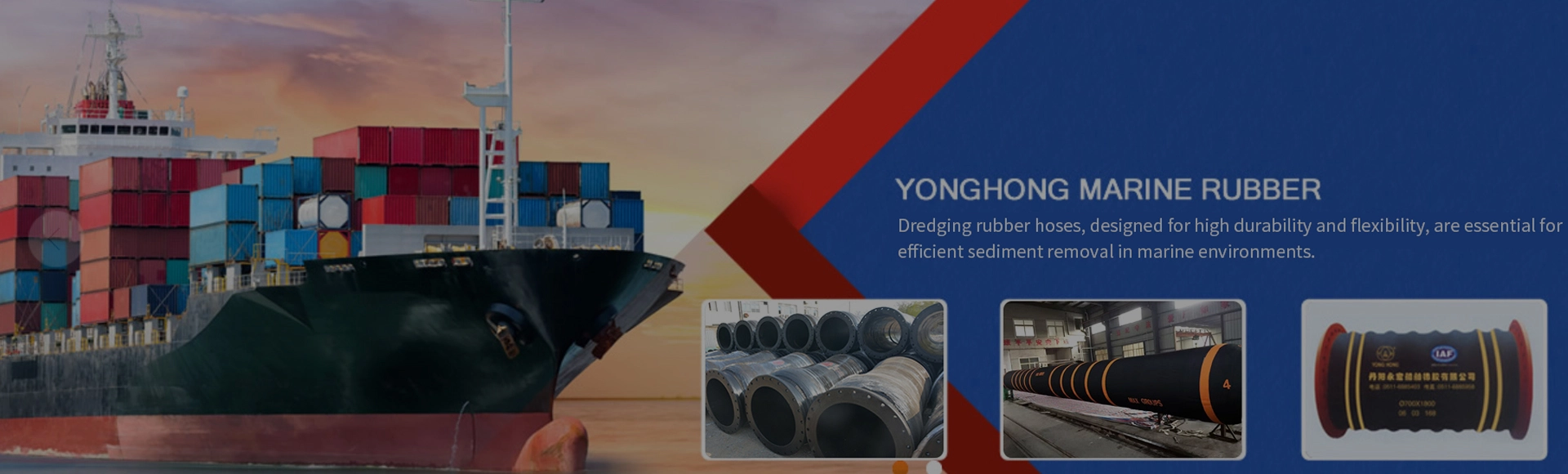
Dredge Rubber Hose Types for Different Pipeline Positions
Dredging projects present varying requirements for rubber hoses. From buoyancy control and wear resistance to system integration and safety assurance,
choosing the right type is the first step to ensuring a smooth project. The following common dredging rubber hoses meet the needs of various applications:
Armored rubber hose
When operating in extreme environments, heavy-duty armored hoses provide additional protection against physical impact and environmental corrosion, ensuring long-term system stability.
Self-floating rubber hose
Designed specifically for offshore operations, with a built-in buoyancy layer, they can be easily deployed on the surface.
YONGHONG's self-floating hose series combines durability and flexibility, ensuring stable operation even in harsh marine environments.
Mud discharge hose
For high-intensity mud discharge, this type of hose is renowned for its excellent wear resistance and flexibility, ensuring long-term stable operation and adapting to demanding dredging conditions.
Suction rubber hose
Designed for efficient mud suction and removal operations, it offers excellent flexibility and wear resistance, ensuring smooth fluid transfer and is a critical component in dredging systems.
Flexible connector hoses
As connectors in the system, these hoses effectively absorb vibrations and ensure stable connections between different components, thereby improving overall operational reliability.
Marine fenders
In addition to transport hoses, durable marine fenders are equally important. They protect the hull during berthing, preventing damage from impact and providing safety for ports and ships.
Dredge Hose Selection Guide
The correct dredge rubber hose should be selected according to its position in the pipeline, transported material, working pressure and installation environment.
| Project Condition | Recommended Hose Type | Main Selection Factors |
| Offshore floating discharge line | Self-floating dredge hose | Buoyancy, waves, UV exposure, pressure |
| Gravel or coral transport | Armored self-floating hose | Impact, abrasion, buoyancy, particle size |
| Pump outlet and slurry discharge | Dredge discharge hose | Working pressure, flow velocity, liner wear |
| Pump inlet and sediment collection | Mud suction hose | Vacuum resistance, bending radius, collapse resistance |
| High-wear pipeline section | Armored dredge hose | Particle hardness, impact and liner structure |
| Pump or rigid pipe connection | Rubber expansion joint | Vibration, displacement, pressure and flange size |
Before selecting a hose, the following information should be confirmed:
Hose type and pipeline position
Required inside diameter
Required hose length
Normal working pressure
Maximum or surge pressure
Transported material
Slurry concentration
Maximum particle size
Flange standard
Project location and operating environment
A hose selected only by diameter may not provide suitable pressure resistance, vacuum performance, buoyancy or wear life. For a more detailed explanation of how pump flow, slurry velocity, pipeline distance and pressure loss affect sizing, refer to our dredging hose diameter guide.
Why Choose YongHong as Your Dredge Rubber Hose Supplier
Project-Based Hose Configuration
YongHong recommends hose structures according to the transported material, pump pressure, particle size, pipeline position, connection method and operating environment.
This helps avoid selecting a hose based only on diameter or general product descriptions.
Custom Manufacturing Support
Available customization may include:
Hose inside diameter
Hose length
Working pressure
Reinforcement structure
Inner lining
Buoyancy configuration
Flange standard
Product marking
Packaging requirements
All custom details are confirmed before production.
Inspection Before Shipment
Hose dimensions, flange connections, visible quality and applicable performance requirements can be inspected according to the confirmed order specification.
Inspection reports can be prepared where required.
Technical Documentation and Export Support
YongHong can support technical drawing confirmation, specification review, product identification, export packaging and shipping documentation for international dredging projects.
More information about YongHong manufacturing capabilities, factory background and qualification documents is available on our company page.
Dredge Hose Manufacturing and Quality Testing
Each dredge hose should be manufactured according to an approved specification and inspected before shipment.
Buyers who need a more detailed explanation of hydrostatic pressure, burst pressure, vacuum, abrasion, bending and flange inspections can review our guide to dredging hose standards and testing.
A typical production and inspection process includes:
Project requirement review
Technical drawing and specification confirmation
Rubber compound preparation
Inner lining forming
Reinforcement layer installation
Buoyancy or armored structure installation
Outer cover forming
Vulcanization
Flange finishing and assembly
Dimensional inspection
Pressure or vacuum testing
Product marking, documentation and packaging
Available inspection items may include the following.
Dimensional Inspection
The inside diameter, outside diameter, hose length, flange dimensions and bolt pattern are checked against the approved drawing.
Hydrostatic Pressure Test
The hose is pressurized under controlled conditions to verify sealing performance, dimensional stability and structural integrity.
The test pressure and holding time should be confirmed according to the hose specification or applicable project requirements.
Vacuum Resistance Test
Suction hoses may be tested under negative pressure to evaluate their anti-collapse performance.
Visual Inspection
The hose surface, flange connection, rubber cover, markings and visible workmanship are inspected before packaging.
Rubber Material Testing
Where required, rubber hardness, tensile strength, elongation, adhesion or aging properties may be tested according to the agreed quality plan.
Documentation
Inspection records, product drawings, packing lists and other required documents can be prepared according to the order and project requirements.
Dredge Rubber Hose Applications
YongHong dredge rubber hoses are used in a range of dredging applications, including port maintenance, river cleaning, land reclamation, sand mining and mining tailings transport.
The appropriate hose type depends on the transported material, pump conditions, pipeline position, installation environment and expected movement.
Port and Harbor Dredging
Harbor dredging removes accumulated sediment to maintain navigation depth.
Common hose requirements include abrasion resistance, flexible pipeline movement, reliable flange connections and stable performance under marine conditions.
River and Canal Maintenance
Suction and discharge hoses are used to remove mud, silt and sediment from rivers, canals and drainage channels.
The hose structure should be selected according to pump type, water depth, sediment composition and pipeline layout.
Land Reclamation
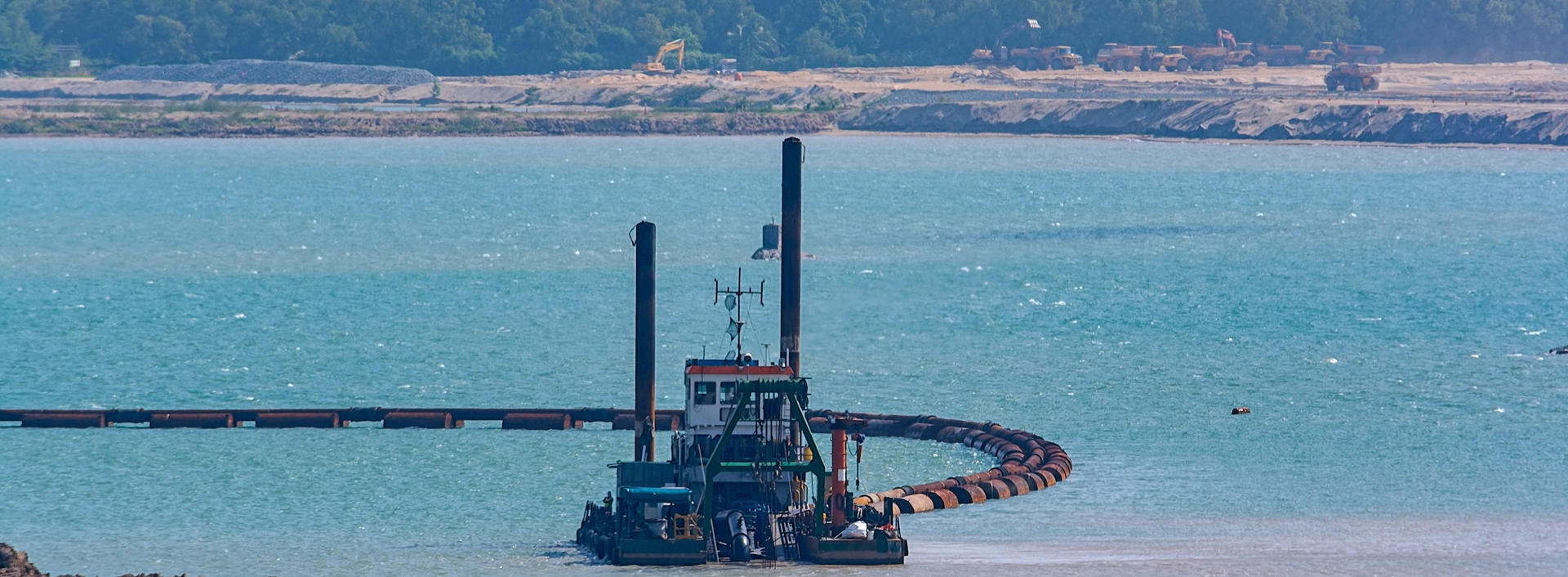
Land reclamation projects often use floating and shore-based discharge pipelines to transport sand and slurry over long distances.
The pipeline may require a combination of self-floating hoses, discharge hoses, steel pipes and rubber expansion joints.
Sand Mining
Sand mining systems require hoses capable of handling continuous abrasive flow.
Important considerations include inner lining thickness, operating pressure, particle size and planned maintenance intervals.
Mining Tailings Transport
Mining slurry and tailings may contain abrasive or chemically challenging materials.
Material compatibility, particle hardness, pressure and wear monitoring should be reviewed before final hose selection.
Recommended Articles
Want to see application examples, common configuration solutions, and successful project summaries for different working conditions?
Click on the related articles below for more inspiration:
Application of Dredging Rubber Self-Floating Hose in Port Maintenance
Dredging Rubber Hoses in Belt and Road Infrastructure Projects
Maintenance: Extending the Life Cycle of Dredge Rubber Hoses
The lifespan of a dredging hose isn't solely determined by factory quality. More often, it's closely tied to daily use, storage, and maintenance.
Many project owners have experienced this: the same hose lasts two or three years on some sites, while failing after just a few months on others.
This isn't a matter of luck, but rather a difference in management.
Maintenance is often considered a "secondary" aspect, but in the dredging industry, it's crucial to ensuring project continuity and reducing overall lifecycle costs.
Imagine an ongoing waterway dredging project halted due to a ruptured dredging hose. This not only means repair costs, but also potential delays and contract penalties.
These hidden costs make maintenance far more important than it appears.
We understand the real-world pressures you face on your projects: maintaining construction schedules while minimizing downtime and wear and tear.
That's why our content not only shares basic maintenance principles but also incorporates common industry scenarios to help you find more practical management approaches.
If you're looking to optimize your maintenance processes or extend the life of your equipment, talk to us. You'll find that even small adjustments can make a significant difference.
Want to learn more about common dredging hose maintenance pain points, preventive maintenance strategies, and how to reduce unplanned downtime?
Click on the related article to read more:
Maintenance Tips for Prolonging the Life of Your Dredging Hoses
Dredge Hose Selection Resources
Dredging Hose Standards and Testing Explained
Review the pressure, burst, vacuum, abrasion, bending and flange inspection items that should be confirmed before purchasing a dredging hose.
Read the guide: dredging hose testing procedures
How to Choose the Right Dredging Hose Diameter
Learn how pump capacity, slurry velocity, particle size, pipeline distance and pressure loss affect dredging hose diameter selection.
Read the guide: how to choose the right dredging hose diameter
Dredge Hose vs HDPE Pipe
Compare flexibility, movement absorption, installation, maintenance and suitable pipeline positions when choosing rubber hoses, HDPE pipes or a combined pipeline system.
Read the comparison: dredge hose vs HDPE pipe
FAQ About Dredge Rubber Hose
What is a dredge rubber hose used for?
A dredge rubber hose is used to transfer sand, mud, slurry, gravel, tailings and dredged materials between dredgers, pumps, floating pipelines and discharge points.
What is the difference between a suction hose and a discharge hose?
A suction hose is used near the pump inlet to draw slurry or sediment from the dredging area, while a discharge hose transfers dredged material from the pump outlet to the pipeline or disposal area.
When should I use a self-floating dredge hose?
A self-floating dredge hose is suitable for offshore, nearshore and floating pipeline systems where buoyancy, wave adaptability and easier deployment are required.
When is an armored dredging hose recommended?
An armored dredging hose is recommended when the transported material contains gravel, coral, sharp stones or other abrasive particles that may cause faster wear or impact damage.
Can dredge rubber hoses be customized?
Yes. YongHong can customize dredge rubber hoses according to project requirements such as diameter, length, pressure rating, rubber compound, reinforcement structure, buoyancy design and connection method.
What should I provide before requesting a quote?
Please provide hose diameter, length, pressure, transported medium, working environment, connection method, quantity and project drawings if available. This helps us recommend a more suitable hose solution.
-
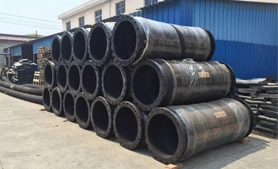 Aug 31 , 2026Types of Marine Fenders: A Practical Guide for Ports, Docks and Marine BerthingMarine fenders are energy-absorbing protection systems installed between vessels and berthing structures to reduce impact force during docking, mooring and ship-to-ship operations. For ports, wharves,...
 -
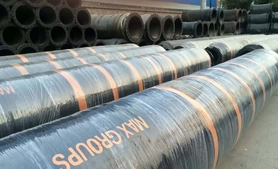 Aug 31 , 2026How to Seal a Rubber Hose: Practical Methods for Industrial and Marine ApplicationsSealing a rubber hose means creating a leak-resistant connection at the hose end, joint, flange, coupling or damaged area so fluid, slurry, air or water can move safely under the required working cond...
 -
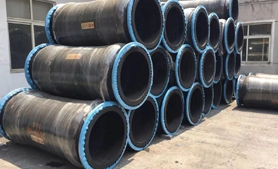 May 29 , 2026Top 7 Mistakes When Selecting Dredging Hoses and How to Avoid ThemAnd How to Avoid ThemSelecting dredging hoses may look simple on the surface. Many buyers start with diameter, pressure rating, and price. However, in real dredging projects, hose performance depends ...
- Rubber Dredging Hose vs HDPE Pipe: Which One Should You Choose?
- How to Choose the Right Dredging Hose Diameter for Your Project?
- How Dredging Conditions (Sand, Clay, Gravel) Affect Hose Selection
- Dredging Hose Layout Design: Floating, Submerged, and Onshore Configurations
- How to Match Dredging Pumps and Hoses Correctly
- Why Cheap Dredging Hoses Fail in Real Projects
- Floating Hose vs Steel Pipe: Which Is Better for Your Project?