 English
-
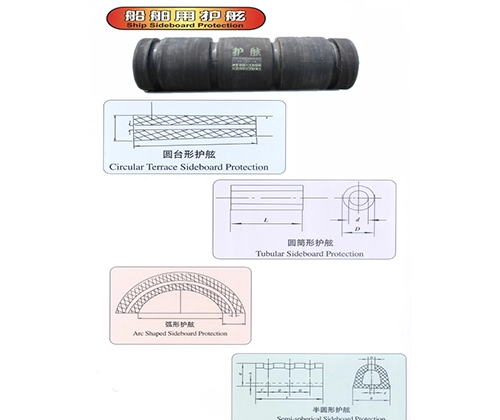
A marine rubber fender is an energy-absorbing rubber component installed between a vessel and a dock, wharf or other marine structure to reduce direct impact during berthing and mooring.
YongHong manufactures marine rubber fenders for ports, wharves, shipyards, workboats and other marine berthing applications. Fender dimensions, rubber hardness, mounting holes, connection details and product markings can be customized according to the installation drawing and project requirements.
A suitable fender should not be selected only by its outside dimensions. Vessel size, berthing conditions, available installation space, dock structure, expected compression and required impact protection should all be reviewed before confirming the design.
For more examples of how rubber protection products are used around docks and vessels, visit our wharf and ship docking systems page.
Key Features of YongHong Marine Rubber Fenders
Impact Cushioning
The rubber body compresses when contacted by a vessel, helping reduce direct impact between the vessel and dock structure.
The actual protection provided depends on the fender dimensions, rubber compound, compression condition, mounting method and project design.
Flexible Rubber Construction
Rubber deformation allows the fender to accommodate repeated vessel contact without creating a completely rigid interface.
The required flexibility should be balanced with:
Structural stability
Rubber hardness
Recovery after compression
Expected contact force
Fender size
Installation position
Resistance to Marine Exposure
Marine fenders may be exposed to:
Seawater
Rain
Sunlight
Ozone
Outdoor temperature changes
Vessel movement
Surface abrasion
Repeated compression
The rubber compound and surface structure should therefore be confirmed according to the operating environment and expected service conditions.
Custom Dimensions and Mounting Details
YongHong can review customized requirements for:
Fender length
Fender width
Fender height
Outside diameter
Inside diameter
Cross-section
Mounting-hole diameter
Hole spacing
End configuration
Rubber hardness
Product marking
Color requirements
Customization is subject to drawing review and manufacturing confirmation.
Replaceable Protection Component
A rubber fender acts as a protective interface between a vessel and a more expensive dock or hull structure.
When replacement is required, the existing dimensions, mounting holes and installation conditions can be reviewed to determine whether a compatible replacement product can be manufactured.
Marine Rubber Fender Applications
YongHong marine rubber fenders can be evaluated for different docking and vessel-protection environments.
| Application | Main Protection Requirement | Information to Confirm |
| Port Berths | Repeated vessel contact | Vessel size, speed and berth structure |
| Wharves and Jetties | Protection of concrete or steel edges | Installation area and mounting details |
| Shipyards | Contact with different vessel sizes | Fender location and maintenance access |
| Tugboats | Compact hull-side protection | Hull profile and fixing method |
| Workboats | Protection during docking and service operations | Contact area and product dimensions |
| Floating Docks | Movement with changing water levels | Dock movement and mounting configuration |
| Fishing Ports | Repeated contact from smaller commercial vessels | Vessel mix and berth layout |
| Inland Terminals | River-vessel berthing protection | Water-level variation and dock structure |
Marine Fender Materials and Construction
The performance of a marine rubber fender depends on the rubber compound, internal construction, dimensions and installation details.
Rubber Body
The rubber body provides the main cushioning and recovery function.
Material selection should consider:
Repeated compression
Seawater exposure
Outdoor weather
UV and ozone
Abrasion
Temperature range
Required hardness
Expected service life
The exact compound should be confirmed according to the project and available material specifications.
Mounting Holes
Mounting holes must match the approved dock or vessel drawing.
Incorrect hole diameter or spacing can cause:
Installation delay
Forced alignment
Fender distortion
Uneven bolt loading
Local rubber damage
Both center-to-center spacing and edge distance should be clearly shown on the drawing.
Embedded Components
Where the design includes embedded steel parts or other reinforcement, the material, dimensions, location and corrosion-protection requirements should be confirmed before production.
Chains and Connection Accessories
Some installations may require chains or other supporting accessories.
Availability should be confirmed according to:
Fender design
Installation orientation
Required movement
Project drawing
Customer supply scope
How to Select a Marine Rubber Fender
The first step is to determine whether the project is a new berth, a vessel-mounted application or a replacement order.
New Dock or Berthing Project
For a new project, provide:
Vessel type
Vessel displacement
Berthing speed
Berthing angle
Dock structure
Tidal range
Fender spacing
Available installation area
Required energy absorption
Allowable reaction force
Applicable standard
The final fender selection should be confirmed by the project designer or qualified marine engineer.
Replacement Fender
For a replacement product, provide:
Original drawing
Overall dimensions
Cross-section
Mounting-hole diameter
Hole spacing
Existing rubber hardness
Product markings
Installation photographs
Damaged-product photographs
Required quantity
An old fender may have permanent deformation or wear, so dimensions should be checked against the original drawing whenever possible.
Vessel-Mounted Fender
For a tugboat, workboat or other vessel-mounted installation, provide:
Vessel type
Installation position
Hull curvature
Contact area
Available fixing points
Required projection
Fender length
Operating environment
Custom Application
For a custom application, a clear drawing should show:
Front view
Side view
Cross-section
Overall dimensions
Hole positions
Installation direction
Supporting structure
Required tolerances
Common Marine Fender Selection and Installation Problems
| Problem | Possible Result | Recommended Action |
| Selection based only on size | Inadequate project performance | Review vessel and berth conditions |
| Incorrect mounting-hole spacing | Installation failure or forced alignment | Confirm the approved drawing |
| Fender too hard or too soft | Unsuitable compression response | Confirm hardness and performance requirements |
| Poor installation alignment | Uneven loading and local damage | Align before tightening |
| Inadequate supporting structure | Movement or anchor failure | Check dock or hull structure |
| Missing performance requirements | Unverified energy and reaction behavior | Provide project criteria |
| Incorrect contact position | Poor force distribution | Review vessel contact area |
| Incompatible rubber compound | Premature aging or cracking | Confirm marine exposure conditions |
| Loose fasteners | Fender movement and wear | Perform scheduled inspections |
| Sharp surrounding edges | Cuts and surface damage | Remove or protect contact hazards |
FAQ
What is a marine rubber fender?
A marine rubber fender is a protective rubber component installed between a vessel and a dock, wharf or other marine structure. It compresses during contact to help reduce direct impact and damage.
Where are marine rubber fenders installed?
They may be installed on ports, wharves, jetties, floating docks, shipyards, tugboats, workboats and other vessel-contact structures.
How do I select a rubber fender for a dock?
Selection should consider vessel type, vessel displacement, berthing speed, berthing angle, dock structure, available installation area, tidal range, energy absorption and allowable reaction force.
Can the marine fender dimensions be customized?
Fender length, width, height, diameter, cross-section, mounting holes and product markings can be evaluated according to the submitted drawing and manufacturing requirements.
What rubber hardness should a marine fender have?
There is no single hardness value suitable for every application. The hardness should be selected according to the fender structure, required compression, vessel contact conditions and project performance requirements.
Can YongHong manufacture a replacement fender from an old drawing?
Replacement production can be evaluated from the original drawing, product dimensions, hole positions, markings and installation photographs. The old product should be measured carefully because long-term use may cause wear or permanent deformation.
What are energy absorption and reaction force?
Energy absorption describes the amount of berthing energy the fender can absorb during compression. Reaction force describes the force transferred through the fender to the vessel and supporting structure. Both values should be reviewed during project selection.
How are marine rubber fenders inspected?
Inspection may include overall dimensions, cross-section, mounting holes, rubber hardness, appearance, material properties and agreed compression or performance testing.
Do you provide installation accessories?
Accessory availability depends on the confirmed design and supply scope. Please submit the required bolts, chains, embedded parts or other accessories with the project drawing.
What information is required for a quotation?
Please provide the project location, application, vessel information, fender drawing, overall dimensions, mounting-hole details, rubber hardness, performance requirements, quantity and required delivery date.
-
 Aug 31 , 2026Types of Marine Fenders: A Practical Guide for Ports, Docks and Marine BerthingMarine fenders are energy-absorbing protection systems installed between vessels and berthing structures to reduce impact force during docking, mooring and ship-to-ship operations. For ports, wharves,...
 -
 Aug 31 , 2026How to Seal a Rubber Hose: Practical Methods for Industrial and Marine ApplicationsSealing a rubber hose means creating a leak-resistant connection at the hose end, joint, flange, coupling or damaged area so fluid, slurry, air or water can move safely under the required working cond...
 -
 May 29 , 2026Top 7 Mistakes When Selecting Dredging Hoses and How to Avoid ThemAnd How to Avoid ThemSelecting dredging hoses may look simple on the surface. Many buyers start with diameter, pressure rating, and price. However, in real dredging projects, hose performance depends ...
- Rubber Dredging Hose vs HDPE Pipe: Which One Should You Choose?
- How to Choose the Right Dredging Hose Diameter for Your Project?
- How Dredging Conditions (Sand, Clay, Gravel) Affect Hose Selection
- Dredging Hose Layout Design: Floating, Submerged, and Onshore Configurations
- How to Match Dredging Pumps and Hoses Correctly
- Why Cheap Dredging Hoses Fail in Real Projects
- Floating Hose vs Steel Pipe: Which Is Better for Your Project?