 English
-
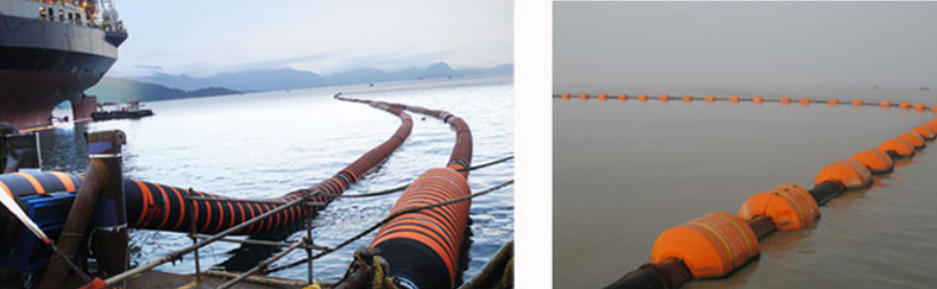
In the world of marine construction, dredging is the vital process of moving sediments to maintain shipping channels, restore beaches, or remediate the environment. While the massive dredging vessels often steal the spotlight, the true hero of hydraulic transport is the pipeline system. Specifically, a specialized component—the self-floating hose—has revolutionized how we move millions of cubic yards of slurry across the water's surface.
The Problem: A Rigid Barrier in a Busy World
According to the sources, one of the primary challenges of pipeline dredging is that the transport lines can become a physical barrier for water traffic. Traditional pipelines, often made of heavy steel, are difficult to move and require significant detention to manage. When a project requires moving sediment from a dredge to a distant placement site, laying a fixed pipeline can block navigation for other vessels and requires a massive "mobilization effort" to construct.
The Solution: The Self-Floating Innovation
The self-floating hose addresses these challenges by combining three critical features: buoyancy, flexibility, and mobility.
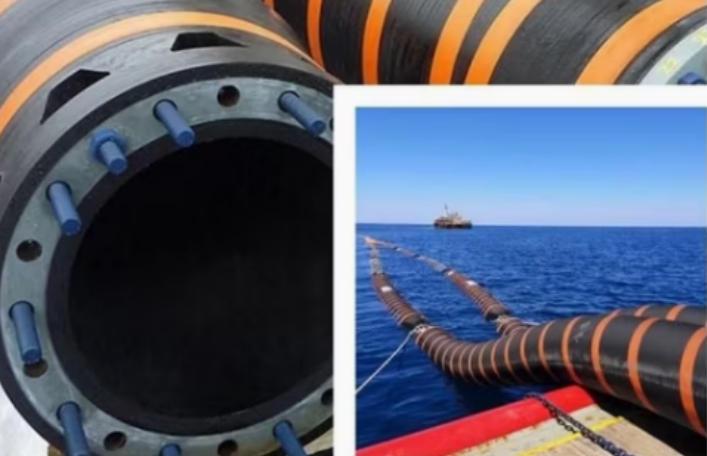
• Navigating "Erratic" Movements: Floating dredging equipment does not stay still; it moves erratically in both horizontal and vertical directions due to tides, waves, and the dredging process itself. A rigid pipe would buckle under this stress. Self-floating hoses serve as flexible joints that can bend and sway without breaking, ensuring a continuous flow of sediment slurry.
• Pipeline Management and Support: The sources highlight that dredging operations require substantial support from ancillary vessels for "pipeline management". Self-floating hoses make this job much easier. Because they are designed to stay on the surface, they are easier for support tugs to reposition, allowing the dredging "train" to move without dismantling the entire transport system.
• High-Pressure Slurry Transport: These hoses are built to handle a challenging cargo. Hydraulic dredges move sediment by mixing it with water to create a slurry that is 10% to 20% solids by weight. This mixture is heavy and abrasive. Self-floating hoses are engineered to maintain their buoyancy even while carrying this dense, moving weight across the water.
Efficiency and Environmental Benefits
By using floating flexible lines, dredgers can utilize techniques like sidecasting, where sediment is replaced in the immediate vicinity of the dredging location. This eliminates the cost of long-distance transport and allows for more "continuous" dredging.
Furthermore, in unconfined placement or beach nourishment projects, these hoses can be easily extended or shortened to discharge sediment precisely where it is needed to restore habitats or protect coastlines.
Conclusion
The shift toward flexible, self-floating solutions has turned the dredging pipeline from a "stationary obstacle" into a "dynamic artery." By allowing for the movement of heavy sediment while adapting to the challenging safety environment and erratic motions of the sea, these hoses ensure that dredging remains an economical and efficient pillar of modern society.
Looking for the Right Self-Floating Hose for Your Dredging Project?
Every dredging project faces different constraints—navigation traffic, water depth, slurry density, working distance, and environmental conditions. The effectiveness of a self-floating hose system depends not only on buoyancy, but also on how well it integrates with your dredger, pumps, and overall pipeline layout.
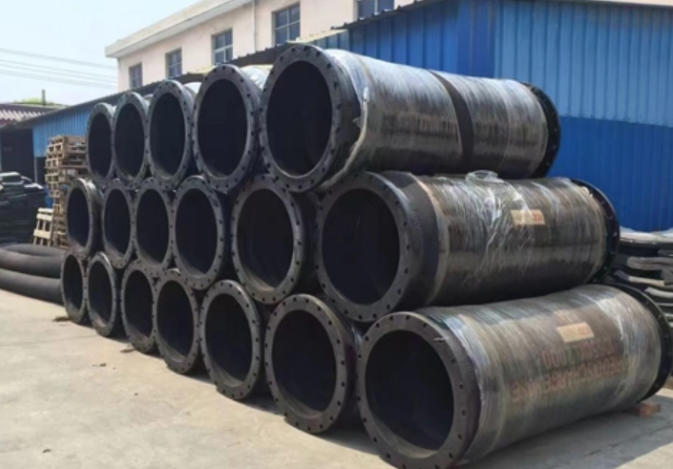
At YH Rubber, we manufacture self-floating dredging hoses designed for real-world hydraulic transport challenges, including high-solid slurry, continuous operations, and busy marine environments. Our team supports contractors and engineering companies with:
Self-floating hose designs tailored to project-specific conditions
Reliable buoyancy performance under heavy slurry loads
Flexible configurations compatible with cutter suction and pump-based systems
Technical support for pipeline layout and hose selection
If you are planning a dredging project or optimizing an existing pipeline system, we invite you to speak with our technical team. A well-designed floating hose system can significantly reduce operational interruptions—and keep your dredging operation moving smoothly.
Contact us today to discuss your project requirements or request technical specifications.

- Introduction of Floating Rubber Hose
- How to Choose the Right Dredging Hose Diameter for Your Project?
- Why Rubber Dredging Hoses Are Black and Orange?
- Why Suction Hoses Aren't Designed as Self‑Floating?
- Meeting the Demands of Modern Dredging:High-Performance Rubber Hoses
- What Makes a High-Quality Dredging Rubber Hose?