 English
-
Channel maintenance dredging is essential to keep waterways safe, navigable and hydraulically efficient. Regular removal of accumulated sediments preserves required depths for commercial and recreational traffic, reduces flood risk, and maintains flow capacity in tidal and riverine systems. Effective maintenance programs depend not only on dredging assets and planning, but also on reliable material-handling systems — with rubber dredge hoses playing a central role in operational success.
Channel maintenance presents diverse operational challenges. Sediment types can vary widely along a single channel — from fine silts and organic muds to coarse sands and shell fragments — each imposing different wear and hydraulic demands. Tidal fluctuation, shallow banks, limited maneuvering space near quays and sensitive ecological zones add complexity. Environmental concerns are increasingly prominent: regulators and stakeholders demand strict turbidity control, minimised benthic disturbance, and clear plans for sediment placement and monitoring. In this context, adaptable, site-specific solutions are critical. Projects such as those undertaken by Neumann Dredging illustrate how tailored approaches — combining appropriate equipment configuration, modular hoses and responsive deployment strategies — can balance efficiency with environmental stewardship.
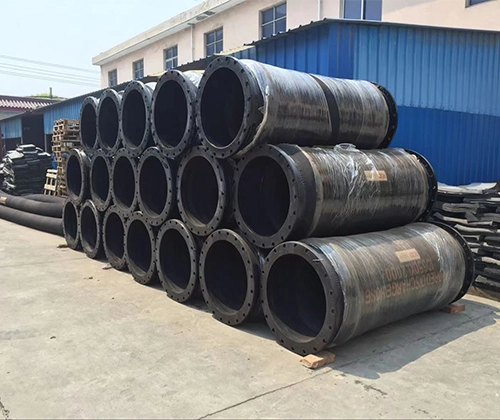
Advanced rubber dredge hoses are a key factor in meeting these challenges. Modern hose systems are engineered for abrasion resistance, chemical compatibility, flexible handling and robust joint integrity, all of which directly influence uptime, pumping efficiency and environmental performance. Hoses with wear-resistant inner liners or replaceable sacrificial sleeves extend service life when conveying coarse, abrasive material. Smooth-bore profiles and optimized internal diameters reduce head loss, lowering energy consumption and decreasing the risk of blockages. Buoyancy options and flexible constructions allow safe routing across changing tide zones and constrained deck spaces while maintaining stable flow characteristics.
For bulk purchasers — ports, municipal authorities, dredging contractors and environmental remediation firms — several critical considerations should guide procurement:
- Material and compound selection: Match inner-liner compounds to the predominant sediment chemistry and abrasivity. Where organic or chemically active slurries are present, confirm compatibility and low-leach properties.
- Reinforcement and pressure ratings: Specify appropriate textile or spiral steel reinforcement to meet pump pressures and vacuum requirements, accounting for long discharge runs and surge events.
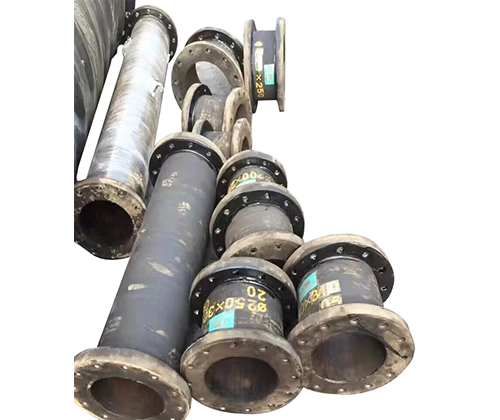
- Couplings and modularity: Use standardized, corrosion-resistant couplings and modular hose sections to enable rapid in-field replacement, minimizing downtime during maintenance windows.
- Environmental controls: Consider hose systems integrated with silt curtains, diffuser nozzles or pressure-regulating fittings to mitigate turbidity spikes during operation.
- Testing, certification and traceability: Require hydrostatic, abrasion and material testing, plus batch traceability to support compliance and maintenance planning.
- Lifecycle cost and logistics: Evaluate total cost of ownership, including expected lifespan, spares provisioning and remote-site logistics. Higher initial investment in engineered hoses often yields lower cost per cubic metre pumped.
Conclusion
Optimizing channel maintenance dredging hinges on selecting hose systems that are engineered for the site’s sediment profile, hydraulic demands and environmental constraints. Advanced rubber dredge hoses — specified with the right compounds, reinforcement and modular connectivity — enhance efficiency, reduce environmental risk and lower lifecycle costs. Bulk purchasers should prioritize supplier expertise, verified testing and flexible hose architectures that can be adapted to changing channel conditions; doing so supports safer, more predictable and more sustainable channel maintenance programs.
- Custom Engineered Dredge Hose Solutions for Bulk Purchases
- Dredging Rubber Hoses in Belt and Road Infrastructure Projects
- Flexibility and Customization: The Core Competitiveness of Dredge Rubber Hoses
- Understanding the Regional Distribution of Dredging Rubber Hose in China
- Maintenance and Lifespan Management of Dredge Rubber Hoses
- Dredging Pipe vs. Dredging Hose