 English
-
Capital dredging works are among the most demanding dredging operations. They involve deep excavation, large material volumes, and long project durations, typically for port construction, channel deepening, land reclamation, and major infrastructure development.
Because these projects operate under high pressure, high abrasion, and continuous duty cycles, dredging hose selection becomes a critical engineering decision, not a simple procurement task.
Below are the key types of dredging hoses commonly used in capital dredging works, and the roles they play within a complete dredging system.
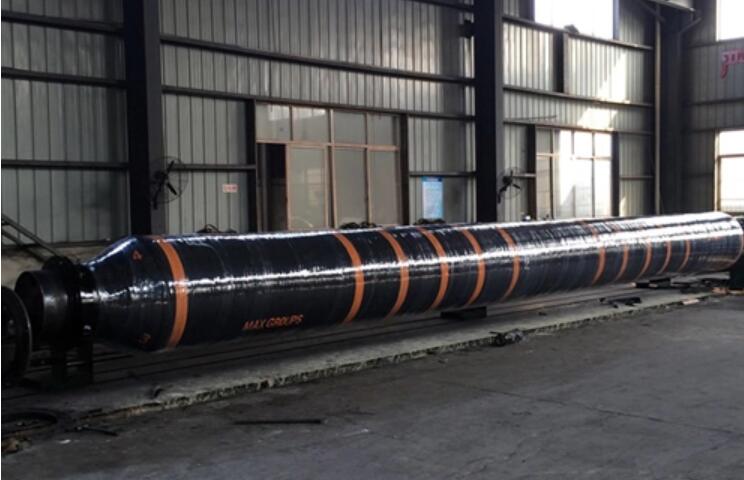
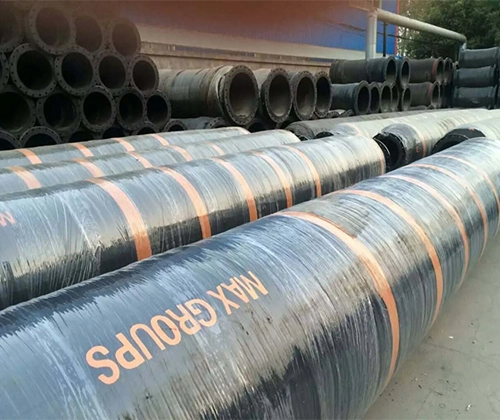
Floating hoses are widely used in capital dredging projects where dredged material must be transported over long distances across water surfaces.
Why they are essential:
Enable long-distance slurry transport from dredger to reclamation area
Maintain pipeline stability on water
Accommodate tidal movement and wave action
Key characteristics:
Built-in buoyancy layer or external floats
High abrasion-resistant inner lining
Reinforced structure for continuous pumping
Marine-grade outer cover resistant to UV and seawater
Floating hoses are typically used in cutter suction dredger (CSD) operations and land reclamation projects.
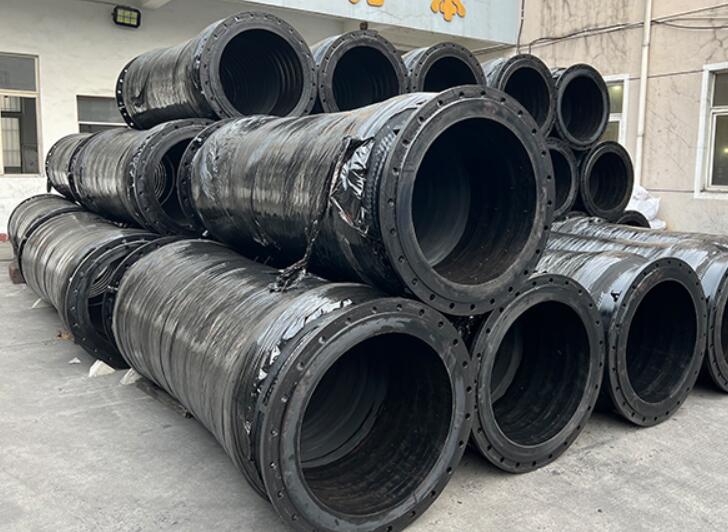
2. Heavy-Duty Discharge Rubber Hoses
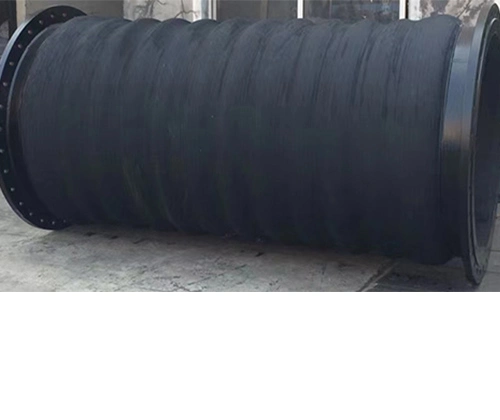
Discharge hoses connect dredgers, booster stations, and steel pipelines. In capital dredging, these hoses operate under constant high pressure.
Typical functions:
Pump outlet connections
Transition sections between steel pipes
Flexible joints to absorb vibration and alignment deviation
Why they matter:
Reduce stress on rigid pipelines
Protect pumps and flanges
Allow easier installation and maintenance
These hoses must offer excellent pressure resistance and fatigue durability.
Suction hoses are used on the intake side of dredging systems, particularly in cutter suction and amphibious dredgers.
Key requirements:
Strong anti-collapse structure
Smooth inner lining to ensure stable suction
High flexibility for dredger movement
In capital dredging, suction hoses often handle dense and compacted material, making structural integrity essential.
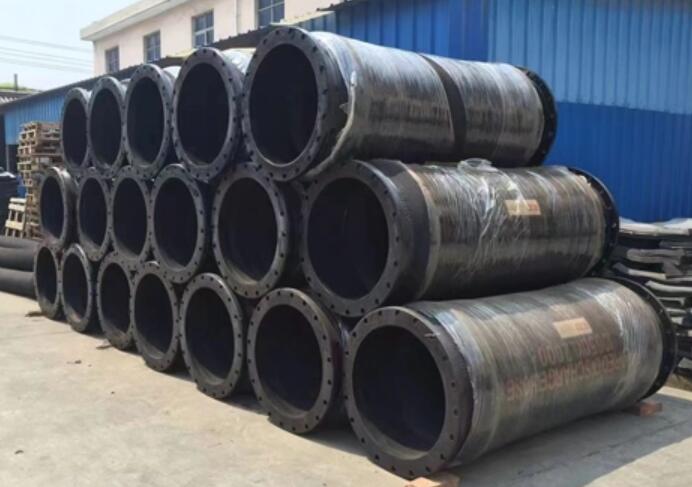
Armored hoses are commonly deployed in capital dredging works where hoses are exposed to external mechanical damage.
Typical application areas:
Sections dragging along seabeds
Near-shore or shallow-water zones
Areas with rocks, coral, or debris
Amphibious dredger operations
Why armored hoses are important:
Protect hoses from impact and abrasion
Extend service life in high-risk areas
Reduce unplanned downtime
They are usually installed selectively, not throughout the entire pipeline system.
Selecting the Right Hose Mix for Capital Dredging
Successful capital dredging projects rarely rely on a single hose type. Instead, they adopt a Total Hose Solution, considering:
Dredger type
Pump pressure
Slurry density
Pipeline length
Seabed and environmental conditions
The correct combination improves operational reliability and reduces lifecycle costs.
Capital dredging works demand hoses that can operate continuously under high pressure, high abrasion, and harsh environmental conditions. Floating hoses, discharge hoses, suction hoses, armored hoses, and flexible connectors each play a distinct role within the overall system.
Need Support for a Capital Dredging Project?
We provide:
Full dredging hose ranges for capital dredging
Engineering drawings and test documentation
Project-based hose configuration support
Export-ready marine-grade solutions
If you are planning or executing a capital dredging project, we are ready to assist with a reliable hose solution.
- Why Rubber Dredging Hoses Are Black and Orange?
- How to Choose the Right Dredging Hose Diameter for Your Project?
- Dredging Hose Standards and Testing Explained: What Buyers Really Need to Know
- Dredging Rubber Hose: The Artery of Underwater Engineering
- Hydraulic vs Mechanical Dredging
- Maximize Your Dredging Efficiency with Premium Rubber Suction Hoses