 English
-
In dredging projects, hose selection is only one part of the system. How those hoses are arranged in the pipeline layout is just as important.
A well-designed dredging hose layout improves slurry transport efficiency, reduces pressure loss, extends hose service life, and lowers the risk of unexpected downtime. A poor layout, on the other hand, can cause excessive wear, bending stress, leakage, floating instability, or blockage — even when high-quality hoses are used.
Most dredging pipeline systems can be divided into three main layout sections:
Floating pipeline section
Submerged pipeline section
Onshore pipeline section
Each section has different working conditions and requires different hose configurations.
1. Why Dredging Hose Layout Matters
A dredging hose is not an isolated product. It is part of a complete slurry transport system that connects the dredger, pumps, floating pipelines, steel pipes, and discharge area.
The layout directly affects:
Slurry flow stability
Pump efficiency
Hose wear rate
Pressure loss
Pipeline movement
Installation and maintenance difficulty
Overall project safety
In many dredging projects, hose failure is not caused by poor product quality alone. It may also come from improper layout, excessive bending, wrong hose positioning, or mismatched hose types.
That is why modern dredging projects increasingly require a Total Hose Solution rather than simply purchasing individual hoses.
2. Floating Pipeline Layout
The floating section is usually the most visible part of a dredging pipeline system. It is commonly used to transport slurry across water from the dredger toward the discharge area.
Typical Applications
Floating hose layouts are widely used in:
Cutter suction dredger operations
Land reclamation projects
Port and harbor dredging
Offshore sand transport
River and lake dredging projects
In this section, hoses must remain buoyant while carrying heavy slurry. They also need to handle movement caused by waves, tides, dredger repositioning, and support vessels.
3. Key Requirements for Floating Hose Layout
A floating pipeline system should provide both stability and flexibility.
The main requirements include:
Sufficient buoyancy under loaded conditions
Flexible movement without kinking
Strong abrasion-resistant inner lining
Marine-grade outer cover for UV and saltwater exposure
High-visibility design for safer marine traffic
Reliable flange or coupling connections
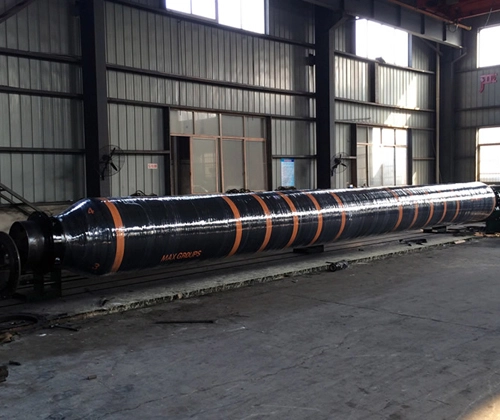
Self-floating hoses are often used in this section because they combine slurry transport and buoyancy in one integrated product. Compared with rigid pipelines, they are easier to move and reposition during operation.
4. Common Mistakes in Floating Layout Design
Several problems often occur when floating hose layout is not properly planned.
Using Too Few Flexible Sections
If the pipeline is too rigid near the dredger, movement from the vessel may create stress at the connection points.
Ignoring Marine Traffic
Floating pipelines may become barriers in busy waterways. High-visibility hose colors and proper pipeline marking help reduce collision risks.
Overlooking Buoyancy Under Load
A hose may float when empty but sag or sink when filled with dense slurry. The buoyancy design must consider real operating conditions.
Poor Connection Planning
Weak or misaligned connections may cause leakage, flange stress, or premature failure.
5. Submerged Pipeline Layout
Submerged pipelines are installed below the water surface. They may be used where floating pipelines interfere with navigation, where the pipeline must cross a channel, or where environmental and operational conditions require underwater installation.
Submerged sections may include:
Submerged steel pipes
Rubber discharge hoses
Armored rubber hoses
Flexible connector hoses
This layout reduces surface obstruction but introduces different risks.
6. Key Requirements for Submerged Hose Sections
Submerged hose sections must be designed for both internal slurry transport and external environmental exposure.
Important requirements include:
Strong external protection
Resistance to seabed friction
Stable connection with steel pipe sections
Protection against rocks, debris, or coral
Sufficient pressure resistance
Reliable anti-leakage performance
Armored hoses are often used in submerged or seabed-contact areas because they provide better external protection than common rubber hoses.
In areas with sharp stones, coral fragments, or heavy seabed contact, using standard rubber hoses may lead to early outer cover damage.
7. When Should Armored Hoses Be Used?
Armored hoses are not always necessary for the whole pipeline. They are usually used in high-risk sections.
Typical locations include:
Seabed contact zones
Nearshore shallow-water areas
Pipeline transition points
Rocky or debris-heavy areas
Sections exposed to dragging or external impact
This selective use helps balance cost and durability. Standard discharge hoses may be used in protected sections, while armored hoses are installed where external damage risk is higher.
This is a practical example of system-based hose selection.
8. Onshore Pipeline Layout
The onshore section carries slurry from the waterline to the reclamation area, disposal pond, processing area, or tailings location.
Compared with floating and submerged sections, the onshore pipeline is usually more stable. However, it still requires proper design.
Onshore layouts may include:
Steel pipes for long straight runs
Rubber discharge hoses for flexible connections
Expansion hoses near pumps
Wear-resistant hoses in high-impact zones
The main goal is to reduce pressure loss, prevent leakage, and maintain stable slurry flow.
9. Key Requirements for Onshore Hose Layout
Onshore pipeline sections should focus on durability, easy maintenance, and efficient flow.
Important considerations include:
Avoiding unnecessary sharp turns
Supporting heavy hose sections properly
Reducing vibration near pumps
Using flexible hoses at transition points
Planning inspection access
Selecting abrasion-resistant linings for sand-heavy slurry
Rubber hoses are especially useful where the pipeline needs flexibility, vibration absorption, or easier installation.
For long straight sections, steel pipes are usually more cost-effective. For moving, vibrating, or misaligned sections, rubber hoses are often the better choice.
10. Floating, Submerged, and Onshore: How They Work Together
In real dredging projects, these three layouts are often used together.
A typical system may look like this:
1. Dredger connection section
2. Floating hose section across water
3. Submerged section near navigation channels or seabed crossing
4. Onshore pipeline section to the discharge area
5. Flexible hoses at pumps, bends, and transition points
Each section has a different job. The best design does not use one hose type everywhere. Instead, it combines floating hoses, discharge hoses, suction hoses, armored hoses, and steel pipes based on actual working conditions.
This is the core idea behind a Total Hose Solution.
11. Practical Layout Selection Guide
Pipeline Section | Common Hose Type | Main Purpose |
Near dredger | Discharge hose / floating hose | Absorb movement and connect pump outlet |
Water surface | Self-floating hose | Transport slurry while staying afloat |
Seabed / underwater | Armored hose / submerged pipe | Reduce surface obstruction and resist external damage |
Shore transition | Discharge hose | Connect floating or submerged line to land pipeline |
Onshore section | Steel pipe + rubber connector hose | Long-distance transport and vibration absorption |
High-risk impact area | Armored hose | Protect against rocks, debris, and dragging |
This type of layout planning helps optimize both cost and reliability.
Conclusion
Dredging hose layout design is not just about placing hoses between the dredger and the discharge site. It is about building a complete slurry transport system that balances flexibility, strength, safety, and cost.
Floating sections require buoyancy and movement adaptability. Submerged sections require external protection and stable connections. Onshore sections require efficient routing, wear resistance, and maintainability.
By selecting the right hose type for each section, dredging contractors can reduce downtime, extend hose service life, and improve overall project efficiency.
Need Support with Dredging Hose Layout Design?
At YH Rubber Hose, we support dredging contractors, equipment suppliers, and engineering teams with project-based hose layout recommendations.
We provide:
Self-floating dredging hoses
Discharge rubber hoses
Suction rubber hoses
Armored hoses for high-risk sections
Customized hose assemblies for floating, submerged, and onshore pipeline systems
Technical drawings and export-ready documentation
If you are planning a dredging project and need help choosing the right hose layout, contact our team with your dredger type, pump data, slurry material, and pipeline route. We can help you build a practical and reliable hose configuration before production.
- Marine Rubber Seals: Key Components for Ensuring the Safe Operation of Ships and Offshore Equipment
- The Difference Between Dredge Discharge Hose and Dredging Hose
- Marine Fender Suppliers: The Invisible Guardians of Port Safety
- Maximizing Efficiency and Safety in Tailings Dredging
- Building the Maldives with Reliable Dredging Systems
- How Dredging Conditions (Sand, Clay, Gravel) Affect Hose Selection