 English
-
In dredging projects, hose failure is not just a maintenance issue—it can lead to pipeline shutdown, environmental risks, and costly delays. That’s why standards and testing are critical when selecting dredging hoses.
However, many buyers encounter confusion:
· Which standards actually apply?
· What tests are truly meaningful?
· How can you tell if a hose is genuinely qualified—or just “claimed” to be?
As one of the professional dredge rubber hose suppliers, we provide this guide that breaks down dredging hose standards and testing in a practical, engineering-focused way.
1. Why Standards Matter in Dredging Hoses
Dredging hoses operate under extreme conditions:
· High-pressure slurry flow
· Abrasive materials (sand, gravel, sediment)
· Continuous operation cycles
· Marine exposure (UV, saltwater, temperature changes)
Standards exist to ensure hoses can perform safely and consistently under these conditions.
But in reality, not all suppliers follow the same level of compliance—so understanding standards helps you evaluate risk, not just specifications.
2. Common Standards for Dredging Hoses
Unlike some industries, dredging hoses do not rely on a single universal standard. Instead, multiple standards are used depending on application and region.
ISO Standards
· ISO 9001 → Quality management system (factory-level, not product-specific)
· Often used as a baseline requirement for export suppliers
BS / EN Standards (UK / Europe)
· Commonly referenced for rubber hoses and marine applications
· Provide guidelines for material properties and testing
Project-Based or Client Specifications
In many large dredging projects (EPC, government, offshore), buyers define their own:
· Pressure requirements
· Material specifications
· Testing protocols
In practice, project specifications often matter more than generic standards.
3. Key Tests That Define Hose Performance
Rather than focusing only on “which standard,” experienced buyers focus on which tests were actually performed.
1. Hydrostatic Pressure Test
Purpose:
Verify that the hose can operate safely under working pressure.
What it checks:
· Leakage
· Structural stability
· Dimensional deformation
Typically tested at 1.5× working pressure
2. Burst Pressure Test
Purpose:
Determine the maximum pressure the hose can withstand before failure.
What it checks:
· Safety margin
· Reinforcement strength
Industry expectation:
Burst pressure ≥ 3× working pressure
3. Vacuum (Suction) Test
Purpose:
Ensure suction hoses do not collapse under negative pressure.
Critical for:
· Intake sections of dredgers
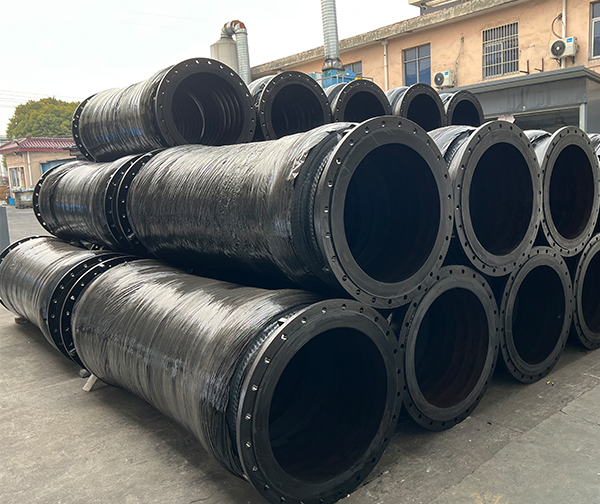
4. Abrasion Resistance Test
Purpose:
Evaluate how quickly the inner lining wears under abrasive slurry.
What it checks:
· Rubber compound quality
· Expected service life
This is one of the most important but often overlooked tests
5. Bending and Flexibility Test
Purpose:
Ensure the hose can handle movement without damage.
What it checks:
· Minimum bend radius
· Resistance to cracking or deformation
Critical for:
· Dynamic pipeline sections
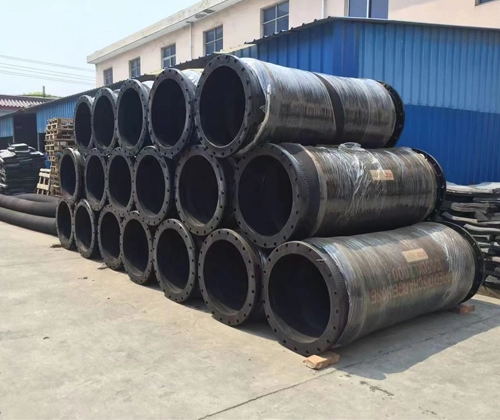
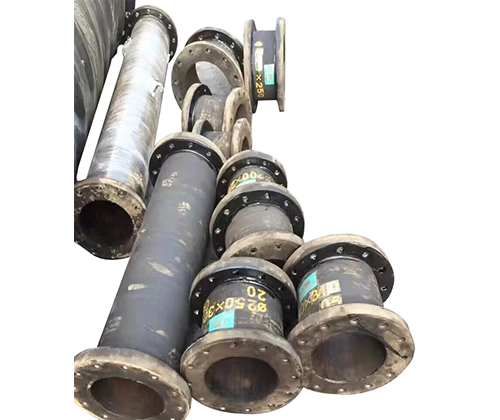
6. Flange and Connection Inspection
Purpose:
Ensure proper alignment and connection reliability.
What it checks:
· Bolt hole accuracy
· Welding quality
· Surface flatness
Poor flange quality is a common real-world failure point.
4. The Gap Between “Standard” and Reality
Many suppliers claim compliance with standards—but actual performance depends on:
· Material consistency
· Manufacturing control
· Real testing vs. nominal testing
· Experience with dredging applications
A hose can “meet a standard” on paper but still fail in real conditions.
5. What Buyers Should Really Ask
Instead of only asking “What standard do you follow?”, ask:
· Can you provide actual test reports (pressure, burst, abrasion)?
· What is the rubber compound specification?
· How do you control batch consistency?
· Have these hoses been used in real dredging projects?
· Can you provide cross-section samples or photos?
These questions reveal far more than a standard certificate.
6. Why Manufacturing Background Matters
Dredge rubber hose manufacturers in marine engineering clusters—such as Jiangsu’s Zhenjiang/Danyang region—often have:
· Better access to testing facilities
· Stronger quality control systems
· Experience with shipbuilding and dredging projects
· Higher consistency in large-diameter hose production
This typically results in more reliable performance under real project conditions.
Conclusion: Standards Are a Starting Point—Testing Is the Proof
Dredging hose standards provide a useful framework, but they are not enough on their own.
· Standards define expectations
· Testing proves performance
· Real project experience validates reliability
For overseas buyers, the key is to evaluate not just compliance—but evidence, consistency, and application experience.
Need Verified Dredging Hose Performance?
We provide:
· Dredging hoses with full pressure, burst, and abrasion testing
· Detailed technical documentation and drawings
· Consistent production for large-scale projects
· Experience supporting marine and dredging applications
Contact us to review test data or discuss your project requirements.
- What You Need to Know Before Selecting Floating Hoses for Dredging Projects?
- How to Choose the Right Dredging Hose Diameter for Your Project?
- Comparison of Floating Rubber Hose with Other Types of Hoses
- Types of Dredging Hoses Suitable for Capital Dredging Works
- 2025 Floating Dredging Hose Market Analysis Report
- Hydraulic vs Mechanical Dredging