 English
-
In dredging projects, the pipeline system is the backbone of material transport. No matter how powerful the dredger is, poor pipeline design can lead to low efficiency, excessive wear, blockages, or costly downtime.
Designing an effective dredging pipeline system is not just about selecting pipes and hoses—it requires a clear understanding of flow dynamics, project conditions, and system integration.
This step-by-step guide outlines how to design a reliable and efficient dredging pipeline system for real-world projects.
Step 1: Define Project Parameters
Before selecting any equipment, start with the fundamentals:
· Dredging volume (m³)
· Transport distance (m or km)
· Slurry density (% solids)
· Material type (sand, silt, gravel, mixed)
· Water depth and working environment (river, offshore, shallow area)
These parameters determine the required flow rate, pressure, and system configuration.
Example:
A land reclamation project with long-distance pumping and high sand content will require a very different pipeline design than a river maintenance project.
Step 2: Select the Appropriate Dredger Type
Pipeline design depends heavily on the dredger:
· Cutter Suction Dredger (CSD):
Continuous pumping → requires full pipeline system
· Trailing Suction Hopper Dredger (TSHD):
Pipeline mainly used during discharge phase
· Amphibious dredger:
Short-distance, flexible pipeline → more hose-based system
Each dredger type defines how the pipeline connects to the system and how slurry flows through it.
Step 3: Determine Pipeline Diameter and Flow Velocity
This is one of the most critical steps.
Pipeline Diameter
· Larger diameter → higher capacity, lower velocity
· Smaller diameter → higher velocity, higher wear
Flow Velocity (key principle)
· Must be high enough to prevent sedimentation
· Must not be too high to avoid excessive wear
Typical dredging slurry velocity:
3–5 m/s, depending on material
Step 4: Calculate Pump Requirements and Pressure Loss
Slurry transport over distance creates pressure loss due to:
· Friction inside pipes
· Bends and connections
· Elevation changes
· Hose flexibility sections
You need to calculate:
· Total dynamic head (TDH)
· Required pump power
· Number of booster stations (if needed)
Long-distance pipelines often require booster pumps every few kilometers.
Step 5: Design the Pipeline Layout
A dredging pipeline is rarely a straight line. A typical system includes:
· Floating pipeline (on water surface)
· Submerged pipeline (if required)
· Onshore pipeline (to discharge area)
Key layout considerations:
· Avoid sharp turns → reduce pressure loss
· Allow flexibility for movement (waves, tides, dredger repositioning)
· Ensure accessibility for inspection and maintenance
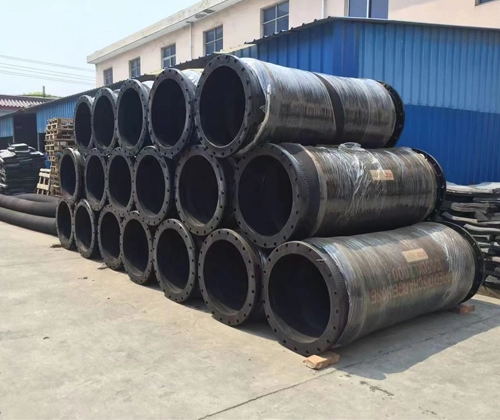
Step 6: Integrate Rubber Hoses at Critical Points
Steel pipes provide strength, but rubber dredging hoses provide flexibility.
Hoses are typically used at:
· Dredger connection points
· Pump discharge areas
· Floating pipeline sections
· Transition points (steel → floating → land)
Types of hoses used:
· Self-floating hoses → for surface transport
· Discharge hoses → for pressure zones
· Suction hoses → for intake side
· Armored hoses → for seabed contact or high-impact zones
This combination forms a Total Hose Solution, ensuring both durability and adaptability.
Step 7: Consider Environmental and Operational Factors
Real-world conditions significantly affect pipeline performance:
· Waves and tides → require flexible hose sections
· Seabed conditions → may require armored hoses
· Navigation traffic → floating pipelines must be visible and manageable
· Weather exposure → UV and saltwater resistance
Ignoring these factors often leads to early system failure.
Step 8: Plan for Maintenance and Replacement
Even the best-designed system requires maintenance.
A good pipeline design should include:
· Easy access to critical hose sections
· Spare hose planning
· Rotation strategy for high-wear areas
· Monitoring points for pressure and wear
Proactive maintenance reduces downtime and extends system life.
Common Mistakes to Avoid
· Choosing hose/pipe based only on price
· Ignoring slurry characteristics
· Using incorrect diameter or velocity
· Underestimating pressure loss
· Lack of flexibility in system design
· No maintenance planning
Conclusion: Pipeline Design Is a System Decision
A dredging pipeline system is not just a collection of pipes and hoses—it is a fully integrated transport system.
The most successful projects treat pipeline design as a balance of:
· Efficiency
· Durability
· Flexibility
· Cost control
Dredge rubber hose suppliers with experience in real dredging environments—especially those based in marine engineering clusters like Jiangsu Zhenjiang/Danyang—are better equipped to support system-level design, not just product supply.
Need Help Designing Your Dredging Pipeline System?
As one of wholesale dredge rubber hose manufacturers, YongHong is ready to offer more solutions:
· Complete dredging hose solutions (floating, suction, discharge, armored)
· Pipeline configuration recommendations
· Technical drawings and pressure data
· Project-based customization for different dredgers and environments
Contact us to discuss your project and get a tailored pipeline solution.

- Comparison of Floating Rubber Hose with Other Types of Hoses
- How to Choose the Right Dredging Hose Diameter for Your Project?
- Top Dredge Hose Manufacturers in China
- Dredging Rubber Hoses in Belt and Road Infrastructure Projects
- Structural Design and Application Advantages of Armored Hose
- What Is the Difference Between Armored Hoses and Common Rubber Hoses?