 English
-
A common misconception in the marine infrastructure and dredging industry is that “dredging hoses”—often labeled as hydraulic dredging hoses—are exclusively designed for hydraulic dredgers such as Cutter Suction Dredgers (CSDs) or Trailing Suction Hopper Dredgers (TSHDs).
In reality, hose applicability is determined by the transport method, not the excavation method. While traditional mechanical dredging relies primarily on barges for material transport, modern mechanical projects increasingly incorporate pump-ashore and pump-off systems, where high-performance dredging hoses become an essential component.
This article clarifies why the term “hydraulic dredging hose” is technically descriptive—but operationally misleading.
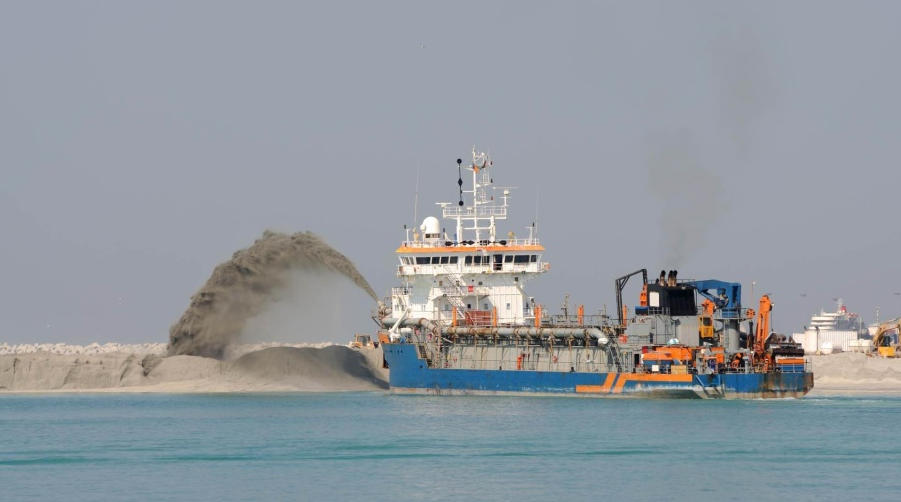
The Root of the Misconception: Why “Hydraulic”?
The term hydraulic dredging hose dominates the market simply because hydraulic dredging inherently depends on pipelines.
In a hydraulic dredging system—such as a Cutter Suction Dredger or a Trailing Suction Hopper Dredger—the excavation and transport processes are fully integrated:
· Excavation: The cutter head or draghead loosens the seabed material
· Transport: A centrifugal pump immediately draws the slurry and conveys it through a pipeline system
Because the hose is a non-negotiable, core component of this workflow, manufacturers, standards, and catalogs naturally classify these products as hydraulic dredging components. Over time, this terminology has created the false impression that such hoses are limited to hydraulic dredgers only.
2. The Functional Reality: Transport vs. Excavation
To correctly understand hose applications, it is essential to separate dredging into two independent phases:
· Extraction (Digging): How material is removed from the seabed
· Transport (Moving): How material is delivered to the disposal or reclamation site
Dredging hoses are transport tools, not excavation tools.
A simple rule of thumb applies:
If material is pumped, a hose is required.
Aspect | Hydraulic Dredging | Mechanical Dredging |
Primary Extraction | Suction / Cutter Head | Clamshell / Bucket / Backhoe |
Standard Transport | Pipeline (Hoses Required) | Hopper Barges |
Hybrid Exception | N/A | Pump-Ashore / Pump-Off Systems (Hoses Required) |
3. The Hybrid Scenario: Mechanical Dredges That Use Hoses
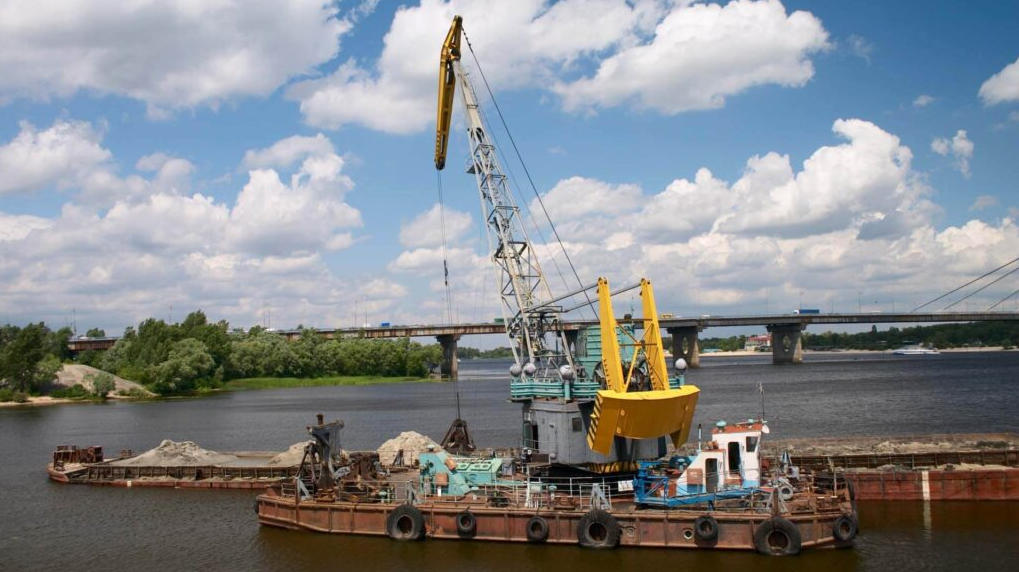
In conventional mechanical dredging, excavators or cranes load material into split-hopper barges, which then transport the dredged soil for offshore disposal. However, many modern projects present logistical constraints:
· Disposal areas located on land
· Shallow waters preventing barge access
· Environmental restrictions on open dumping
In these cases, pump-ashore or pump-off systems are employed.
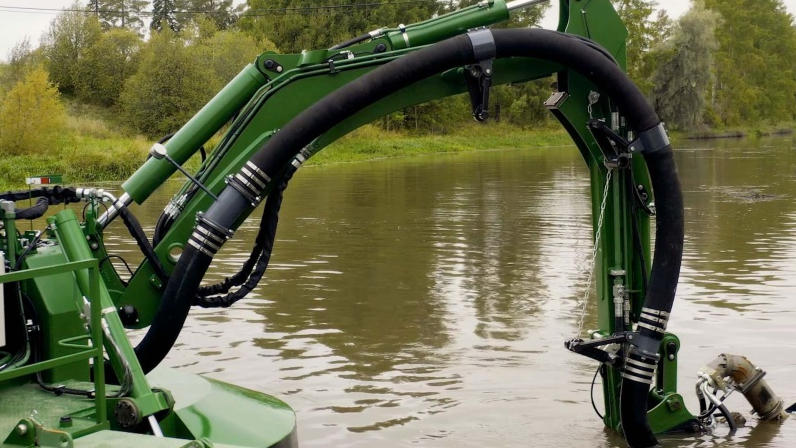
Typical Hybrid Workflow
1. Mechanical Extraction
A clamshell dredge excavates material and loads it into a barge.
2. Material Fluidization
High-pressure water jets are used inside the barge to re-suspend the soil into slurry form.
3. Hydraulic Transport
A centrifugal pump discharges the slurry through a dredging hose line to shore.
At this stage, a mechanical dredging operation is functionally performing hydraulic slurry transport. The hose does not “know” how the material was excavated—it only responds to pressure, abrasion, and flow conditions.
Technical Suitability: What Actually Makes a Hose “Fit”?
A dredging hose is suitable for any application—hydraulic or mechanical—if it meets the fluid transport requirements. Key selection criteria include:
· Abrasion Resistance
Ability of the inner liner to withstand sand, gravel, or mixed sediments
· Working Pressure Rating
Compatibility with pump discharge pressure (commonly 10–30 bar)
· Flexibility and Bend Radius
Ability to accommodate barge movement, wave action, and alignment changes
· Structural Reinforcement
Ensuring dimensional stability under cyclic pressure loads
Why This Distinction Matters?
If a procurement team rejects a hose solely because it is labeled “hydraulic dredging hose” while sourcing equipment for a mechanical dredge’s pump-off system, this represents a technical misunderstanding, not a compatibility issue.
As long as pressure, abrasion, and flexibility requirements are met, the hose is entirely suitable.
Conclusion: Terminology vs. Engineering Reality
The term “hydraulic dredging hose” describes the origin of the design, not the limit of its application.
· Fact: These hoses are engineered to transport abrasive slurry under pressure
· Verdict: They are suitable for any operation—hydraulic or mechanical—that relies on pumping material
· Recommendation: When specifying dredging equipment, focus on the transport method (slurry pipeline vs. dry bulk transport), not the excavation method
If a mechanical dredging project utilizes a pump-off system or slurry discharge line, a standard hydraulic dredging hose is not only appropriate—it is often the most reliable and cost-effective solution available.
Looking for the Right Dredging Hose for Your Project?
Stable export service for long-cycle dredging and marine infrastructure projects
Whether your project involves hydraulic dredging, mechanical dredging with pump-off systems, or hybrid operations, our team can help you select the right hose configuration for safe, continuous, and cost-effective operation.
Contact us for technical consultation, samples, or a project-specific quotation.
We are ready to support your dredging project with reliable solutions—not just products.

- Self-Floating Dredge Hose: A Competent Assistant in Hydraulic Engineering
- Dredging Pipe vs. Dredging Hose
- A Repo of China Dredging Technology & Equipment Expo 2025
- How to Match Dredging Pumps and Hoses Correctly
- Marine Fender Suppliers: The Invisible Guardians of Port Safety
- Case Study: Small Dredging Project at a Local Marina